
Memory Rewoven
- innoverseinfo
- Nov 27, 2025
- 3 min read


Auntie Renee has dementia. 40 years of love and laughter that she can barely remember. I watch mycousins’ faces crumple when she looks at them with nothing but confusion. But while it’s hard on the family, I take comfort in knowing that dementia is not the death sentence it once was, and the family doesn’t have to be torn apart by this tragedy. Auntie Renee still shines through in flashes of clarity, and that means that the memories are still there. More specifically, the neural pathways are still there.
30 years from now, doctors no longer say “There’s nothing more we can do” when it comes tomemory care. Instead, they prescribe hope.
It comes in a silver case, holding a disc barely thicker than a fingernail, delicate enough to be
implanted into the brain with minimal disturbance. This little disc is changing the world, and it’s bringing loved ones back to their families. It’s called Neurolace, an implantable neural scaffold designed to revolutionise memory care.
The doctors take their time explaining the science of it to us: Neurolace is the brainchild of decades of research in neurobiology, building upon innovations like Deep Brain Stimulation and the understanding they gave us of the brain’s electrical pathways. It maps, repairs, and re-stabilises the deteriorating neural pathways associated with memory storage–the same things causing Auntie Renee to slip farther and farther away. Memories are stored as electric and chemical patterns, not all in one place. Similar to the research of the 2020s, which found that individual letters and speech created distinct patterns and “neural fingerprints”, so to speak, in the brain, researchers were able to identify distinct imprints created by core memories. They identified the neural fingerprints of memories, and
by integrating advancing AI models into brain scans and studies, they were able to rebuild these fingerprints. It started with simpler memories and evolved to more complex ones. One thought cuts through the science jargon: We could get my aunt back.
But how do you rebuild something as fragile and personal as a memory?
The answer was graphene, a 2004 discovery then lauded for being incredibly light, thin, and
extremely strong (over 40x more so than diamond). While decades passed with graphene’s potential squandered because of manufacturing costs and scale challenges, the 2050s brought advanced capabilities. Graphene was adapted into neural graphene because of its extraordinary electrical conductivity; its thinness allowed it to blend seamlessly with brain tissue.
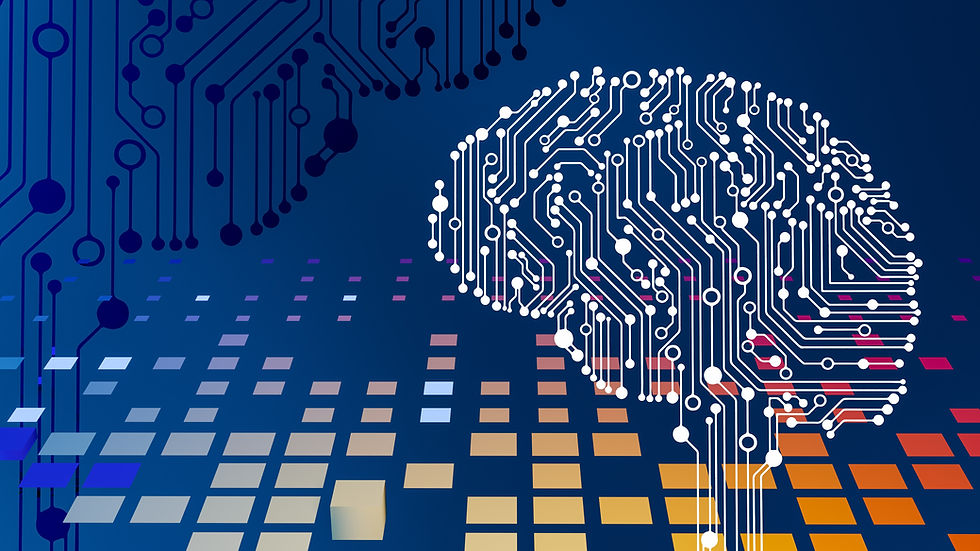
Researchers saw a way to make Neuralace possible. They used graphene to build microscopic scaffolds–bridges really–that could be implanted directly into the amygdala, hippocampus, prefrontal cortex, and cerebellum, areas majorly involved in memory. Neurolace pulses with electrical patterns meant to mimic and direct Auntie Renee’s damaged neural pathways. And while trials started out with patients only recalling hazy flashes, scientists adapted and improved the system. The ‘dictionary’ of
neural fingerprints grew more comprehensive, and eventually full sequences began returning, like watching a broken mirror reassemble itself.
Of course, the challenges of dementia aren’t all gone. But Auntie Renee feels whole again. Before the implant, she forgot her daughters’ names. Six months later, she could recognise her face every time. The emotion on her face the first time was unmistakable. Memory Rewoven.
In many ways, Neuralace is less a device and more a promise. It is a promise that loss of memory doesn’t have to mean loss of personhood. Innovation rooted in empathy gives people back their lives.
I imagine a future where the Neuralace is a common solution. I imagine one where no child has to watch their loved one slip away, one memory at a time. Cognitive decline doesn’t have to mean slow disappearance; it’s only a technical challenge.
We’re not there yet, but the groundwork is set. The threads have been spun, and the loom is ready. We are innovating the future, and with it, we can remember everything we thought lost.
By Phoebe Amakiri


Comments